

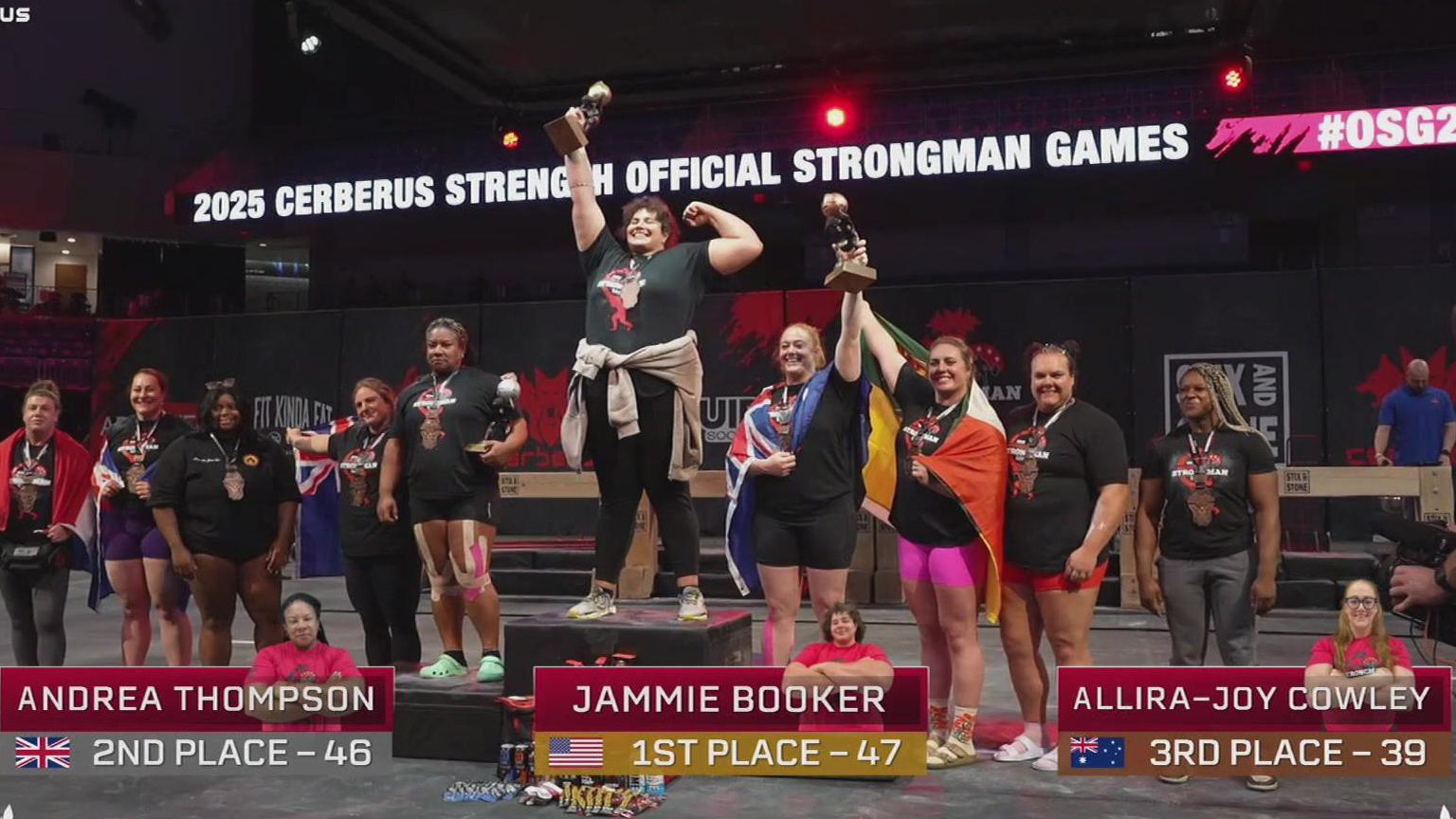
Jammie Booker faced disqualification from the global female strength competition
An English competitor honored as the world's strongest woman says she was deprived of her winning moment after it was revealed the original champion was a transgender woman who was not qualified to compete.
Andrea Thompson was awarded the championship retrospectively after US competitor the disqualified contestant was removed from competition.
Thompson explained to sports media the event, held in the Texas city of Arlington, was clouded by an individual who wasn't eligible to participate.
"I felt very disappointed and upset with what she's done," she stated. "She was untruthful and was very deceptive, and took away a lot of things from a lot of women.
"The lady that came 11th was denied the chance to do the final day... to have the top 10 status in the world."
Event coordinators, the competition body, stated "participants could only compete in the category for their birth sex recorded at birth", and that they had eliminated the competitor in dispute "who is biologically male."
Event Background
Documentation show Booker participated in at least two other strongwoman events this year - taking first place at the Rainier Classic in June and placing runner-up at North America's Strongest Woman in mid-summer.
Sports media could not contact Booker and the organization said "an attempt had been made to contact the athlete... but a reply had not been obtained."
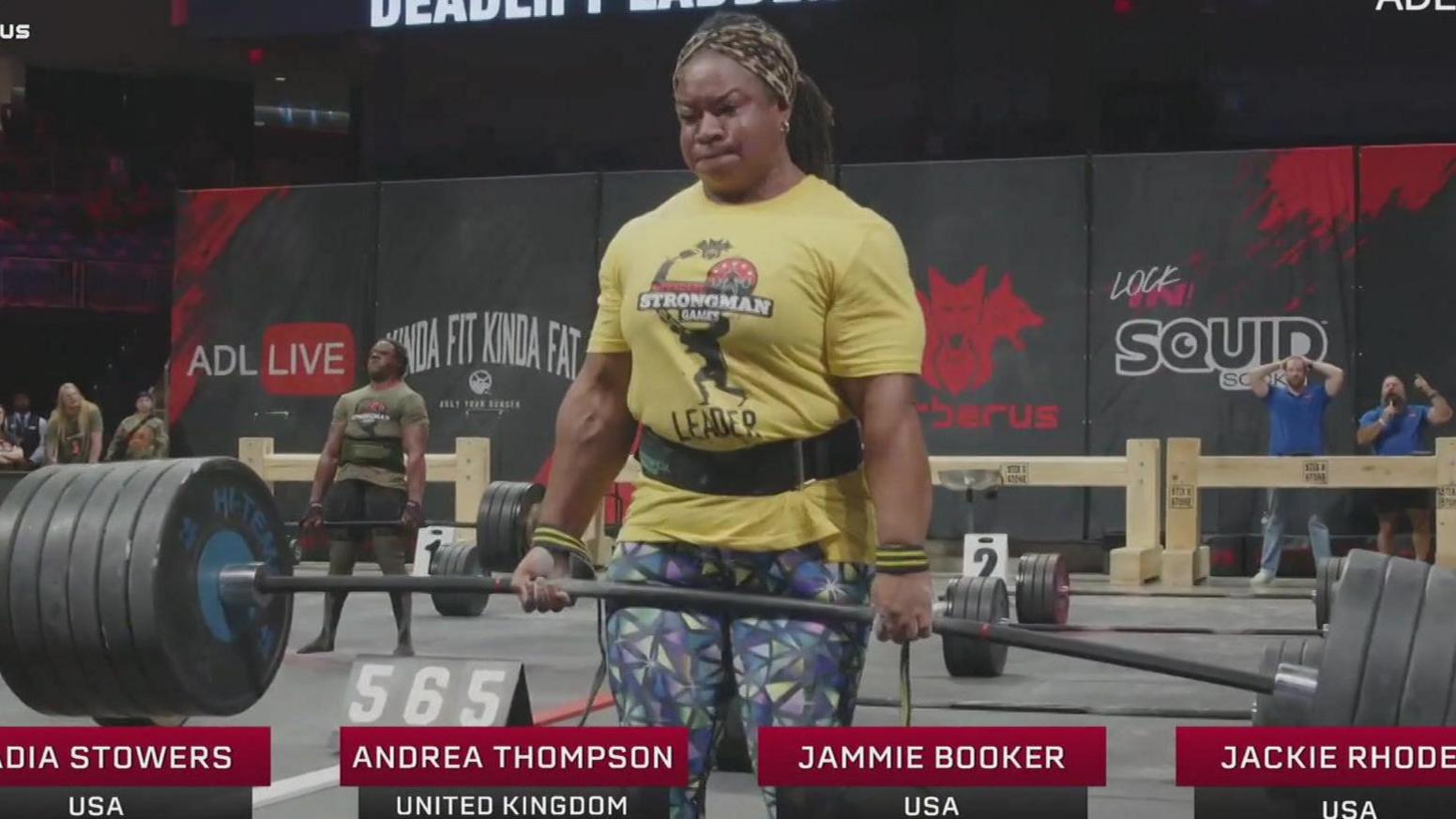
The British athlete had initially finished runner-up to the US competitor
The champion, forty-three, eventually became the global female strength champion for the second time, having earlier won the title in 2018.
But it was only after this season's competition concluded that she learned her opponent had been not qualified to compete.
"There existed no indication at all during the competition - nobody had any cause to suspect any issues," said the mother of two from East Anglia.
"It happened about several hours after that the first rumours started circulating, and then the officials notified me.
"It's a significant achievement that's been overshadowed by some deception."
Competition Details
Power competitions have no single governing body, instead, independent groups organize a range of competitions.
The Global Female Strength championship is awarded at the International Strength Competition, organized by a British company.
More than 400 athletes from approximately forty countries took part in this season's event, which organisers describe as "one of the pinnacles of the power sports community."
The Games included contests across various gender, weight and age categories.
The British athlete and the American competitor were in the Female Open division and competed in half-dozen events over multiple days, including the log press, timber frame carry and deadlift ladder.
Regulations and Eligibility
A statement from the organization said: "Competitors are assigned to men's or female categories based on whether they are recorded as man or female at birth.
"It appears that an athlete who is male by birth and who now identifies as female competed in the Female Open category... officials were not informed of this fact ahead of the event."
In twenty twenty-three, the state enacted a law banning "biological men from competing against female athletes", although this is limited to higher education sport in the region.
Thompson believes strongwoman competitions may implement sex screening in the coming years.
"I guess it's going to have to proceed along that path... but our sport is still relatively recent. There's not enough funding in it to have these procedures in place. We rely on the integrity of the athletes."
Broader Athletic Context
In recent years, a growing number of athletic organizations have barred competitors who have experienced male puberty from participating in elite women's events, amid apprehensions over fairness and protection, including global aquatics and track and field organizations.
In May, major British athletic organizations were among a group of associations to follow suit, after the Britain's highest court's ruling that the official classification of a female is based on biological sex.
The decisions have been opposed by trans rights campaigners, who argue they could infringe upon human rights and maintain inclusion should be prioritised.
Both international athletics and pugilism organizations introduced chromosomal testing this year, asserting it is needed to safeguard the integrity of female sports.
A representative from the global track organization has stated that between fifty to sixty competitors who went through male puberty have been finalists in the women's division in international and regional track and field championships since 2000.


